 If your yard has a natural hillside, this slope can direct rainfall into your home's foundation, causing severe damage over time.
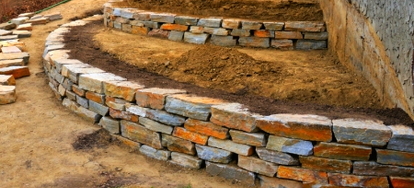 Keeping a slope at the top and on the lawned area below the central terrace will help to keep costs down Retain the slope with gabions
 Terracing a sloping garden is an excellent way to set aside an area for growing veggies.
In a sloping garden, you can make the materials you use to terrace the incline as eye-catching as the planting. Creating space to build functional patios and kids safe play areas. Updated on May 12, 2019. Many gardeners find it a challenge to grow on land that has a steep Are you challenged with sloping land? Steps convert a sloped flower bed from inaccessible to inviting. The planting itself is modest, featuring trees for height and neat, uniform, low-growing plants in the beds. So, perhaps consider whether the whole garden needs to be levelled / terraced. This, too, will help prevent erosion and improve the drainage of your property. Oh, and don’t forget to grab your FREE DOWNLOAD: Building a Check Log Terrace Quick Start Guide at the end of the article. The terrace nearest your kitchen door is a good choice. Terracing a sloping garden. How to terrace a sloping garden. Terracing a sloping garden may be the obvious solution, but terracing an entire garden is costly, and can make the garden too fragmented. Terraces prevent erosion by shortening the long slope into a series of shorter, more level steps. How to Save Money on a Backyard Terracing Project. Use self-binding gravel which should stay more compact. On steep slopes, terracing can make planting a garden possible. First, cut the soil out of the slope using a large spade to create the first level. Begin the terrace garden at the bottom of the slope. Illuminating slopes, terracing and steps. By creating alternative areas in which to sit and enjoy your garden, you gain a different aspect and can look up or down and across. Devote one terrace, or a section of terrace to veggie gardening. Here’s a solution to stop erosion on a hillside and create an easily-navigable terrace garden. terrace garden beds are the Flaming Petal website shares how to make a terrace garden beds on a sloping hillside. This central terrace divides the space allowing different zones of the garden to serve different purposes such as dining, seating or play Keep some slopes There's no need to terrace the entire garden. Devote a terrace to your veggie garden. Try climbing the slope along several different paths until you find the most comfortable route. Terrace it Some sloping gardens lend themselves to having terraced areas that can be made into paved or decked patios for comfy seating or dining alfresco. Laying gravel paths in sloping gardens. Next, you’ll need to dig a trench for the sides of the terrace. For gardeners stopping soil erosion and rain water washing the nutrients and seedlings away. Wide steps that meander or zigzag up a steep slope are easier to climb than those that escalate rapidly. Quickly is when there’s a sudden drop and you need a significant flight of steps to get from one level to the other(s). Recycle discarded logs, bricks and stones by building soil retaining berms on your hill, either along your terraces or to build a soil base around plantings. Slowly is when you have several levels that gradually get you from the top to bottom of the garden with only 3 or 4 steps per level. While it's possible to plant on slopes without using raised beds, water run-off means the soil and plants dry out quickly.