 The sunnier the area, the more water the plants will need.
 Plants produce upright mounds of grey-green leaves, bearing clusters of dangling pink buds that open into bright sapphire-blue bells.
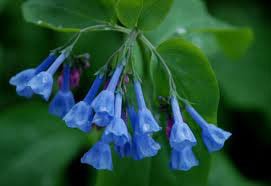 Virginia Blue Bells.
pulmonarioides) Virginia Bluebells are native to most of Eastern North America where they grow in moist woodland areas. An erect, clump-forming perennial which grows 1-2 feet tall and features loose, terminal clusters of pendulous, trumpet-shaped, blue flowers (to 1 inch long) which bloom in early spring. Saved from prairiemoon.com. Virginia bluebells provide a splash of pastel color in this Spring scene. Given the right location and climate, you shouldn’t have to do too much to maintain bluebells. Virginia Bluebells Native to North America, this perennial plant is one of the prettiest wildflowers. Though the blooms are short lived and tend to only last through the spring months, Virginia blue bells offer beautiful, full clusters of sky blue bell-shaped blossoms. ... Full sun to shade. Given moist rich soil and part shade, Mertensia will naturalize. Learn Bluebell gardening tips, including planting Bluebells in shade. Virginia Bluebells (Mertensia virginica) is a native wildflower that occurs statewide in moist, rich woods and river floodplains. The Virginia Bluebells is one of the most delightful flowers in the early Spring garden. Trumpet shaped flowers are pink in bud, opening to shades of blue. Virginia Bluebells Mertensia virginica. A low-growing perennial that’s hardy, content with average soil in semi-shade or full sun, requires no special skill to cultivate and is not bothered with insects. They are also beautiful — emerging with purple buds that transform into several hues of deep and pale blues. They are a member of the borage family, related to forget-me-nots and lungwort. Because the plants are dormant during the summer, plant them near or among late-emerging perennials that will fill in the gaps left when plants die back. Flower Gardening For Beginners Try growing Virginia Bluebells in your flower garden. Virginia Bluebells grows in zones 3 to 8, reaches 2 feet tall. Partial to full shade; consistently moist soils. Like Virginia bluebells, wood hyacinths will thrive in shade or part-sun in the South and will tolerate full sun in northerly climates. Plant Virginia bluebells in the spring or fall in rich, moist soil in partial to full shade. Virginia Bluebells Mertensia virginica Borage family (Boraginaceae) Description: This herbaceous perennial plant is 1–2½' tall, branching occasionally. (=M. Both English and Spanish Bluebells make excellent transition bulbs between early-spring bloomers and early summer perennials. This clump-forming perennial has light blue to purplish blue pendulous flowers that open from pink buds atop 16- to 24-inch stems in mid- to late spring. Virginia Bluebells are perfect for woodlands and shade gardens, where they will provide beautiful bell-shaped flowers that transition from pink to purple and finally to blue. Native to North America, this perennial plant is one of the prettiest wildflowers. They need dappled sun or partial shade, so a wooded area of your yard is perfect. The buds are held on a coiled stalk. Virginia bluebells (Mertensia virginica) are perennial wild flowers that are native to the woodlands of eastern North America.They are very cold hardy so their range stretches from Canada to Alabama (zones 3 – 8). Clusters of small, trumpet-shaped flowers nodding from a single sturdy stem look stunning in any garden location. USDA Zone: 2-9. Clusters of small, trumpet-shaped flowers nodding from a … The soil should drain well but stay reliably moist with a lot of rich, organic material. Native to North America, bluebells are charming woodland plants that thrive in partial to full shade. Virginia Bluebells (Mertensia Virginica) are very attractive perennial flowers. USDA Hardiness Zone. pulmonarioides) Virginia Bluebells are native to most of Eastern North America where they grow in moist woodland areas. Blooming starts in early to mid spring with the formation of pink buds that later mature into lavender-blue flowers. The soil should drain well but stay reliably moist with a lot of rich, organic material. Virginia bluebells (Mertensia Virginica), shown in the lower half of the photo above, are the native choice. Virginia bluebells are easy to grow, take shade or dappled sun and really brighten up a garden. Blooms appear in April and May. Striking Virginia Bluebells attracts bees particularly female bumblebees. A lightly shaded area by a stream is perfect.