 Once you know how to care for a rubber tree plant and it is growing well, you can begin the propagation of indoor rubber tree plants.
 See a picture, get answers to plant care questions.
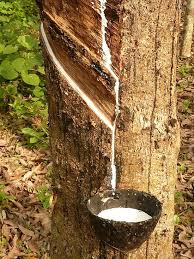
It takes about six years for a rubber tree to grow to a point where it's economical to harvest the sap, which is called latex.Here's how you tap one: The collector makes a thin, diagonal cut to remove a sliver of bark.
Rubber trees, a type of ficus, have few maintenance requirements beyond proper watering. The plant pot was wrapped in plastic and the soil was moist (repotted in the pictures). The rubber tree (Ficus elastica) is grown as a houseplant rather than outdoors in most of the United States because of its sensitivity to cold weather. Propagation of a Rubber Tree Plant. The rubber tree plant is a fantastic indoor houseplant and is pretty easy to take care of. You can propagate a new rubber tree plant from a cutting. A classic houseplant, the rubber tree plant (Ficus elastica) grows up to 100 feet tall when grown outdoors. Then, plant a rubber tree in the pot using 1 part peat, 1 part pine bark, and 1 part sand or perlite. The Rubber Plant (Ficus elastica) could be the ideal houseplant for you if you want a tough but easy going indoor plant that can reach staggering heights within just a few years.The shiny glossy leaves look great in most homes and although young plants start off small they will fill the space in an empty corner quickly. The rubber plant (Ficus elastica) is a popular ornamental plant from the Ficus genus. When placed in a well-lit, warm area with adequate air circulation and regular applications of water-soluble fertilizer, a rubber tree can outgrow its pot. For best results, bring your summer camper indoors before you turn on the central heating. Of all of these trees, the best rubber-producing tree is H. braziliensis.. Hevea brasiliensis, the Pará rubber tree, sharinga tree, seringueira, or, most commonly, the rubber tree or rubber plant, is a flowering plant belonging to the spurge family Euphorbiaceae.It is the most economically important member of the genus Hevea because the milky latex extracted from the tree is the primary source of natural rubber In order to promote new leaves on a current rubber tree houseplant, cut a slit in the node where a leaf fell off. This rubber tree arrived in … If they do drop one, it can be used to plant another rubber tree, or for making rum. The rubber plant is an amazing indoor houseplant and is simple to care for. In my horticultural book, the Rubber Plant is the easiest of the ficus trifecta to maintain and keep alive. That’s why I want to share these Ficus elastica, or Rubber Plant and Rubber Tree… Learn exactly how to grow ficus elastica in this in-depth guide. Here's how you tap one: The collector makes a thin, diagonal cut to remove a sliver of bark. A usually problem-free indoor plant, the rubber tree (Ficus elastica) also grows outdoors in U.S. Department of Agriculture hardiness zones 10 and 11.