 A nut is a small hexagonal object made out of metal.
The main physical distinction between screws and bolts is that screws are entirely full of threads while bolts contain shanks without threads.
The higher the ISO numbers are, the stronger the bolt.
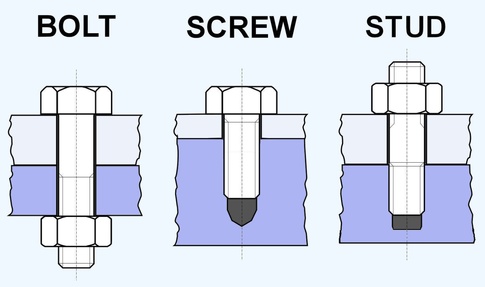
What is the difference between fasteners, bolts and screws? Metric fasteners are measured by length and pitch, or the distance between threads. There are many differences between nuts and bolts. When being used, bolts do not need to … The main physical distinction between screws and bolts is that screws are entirely full of threads while bolts contain shanks without threads. How Hex Nuts Cause Fastener Failure. It is shaped in a hexagon so that it is easy and firm to grip from all sides. On the contrary, screws are normally used with tapped holes. Bolts usually hold and compress the material as there is a nut or washer involved. In a fixed position a bolt is harder to rip out, whereas a cap screw is easier because there is no nut … The class depicts the tensile strength of the bolt divided by 10. Bolts and nuts are nearly always used together to fasten a stack of parts together. There’re different kinds of bolts each made for a specific application. One key difference between bolts and nuts is that bolts come in various length and sizes. Fastener is a general term to describe something which is used as a restraint for holding things together or attaching to other things. The choice of bolt depends on the thickness of the material between the bolt’s head and the nut. The distinction between a bolt and a screw is commonly misunderstood. But it’s not correct. Most bolts can work as screws if used in threaded components. 3.A nut is a small metallic object, whereas a bolt is basically a screw. Their most distinct difference is that screws need torque to be applied to its head to fasten it into the material while a bolt always needs a nut wherein the torque is applied. Whereas a cap screw is held and compressed by the material it is fixed to such as wood, metal, plastic or cement. However, a better interpretation of the differences between the two is that bolts are always fitted with nuts. Bolts and nuts are nearly always used together to fasten a stack of parts together. Anchor bolts are used to attach objects to concrete, brick or stucco. 1.A nut is a small metallic object which is fastened to a bolt. On the contrary, screws are normally used with tapped holes. 2. SAE nuts, bolts and screws are measured by their thread count, or TPI (threads per inch) and their length. You can like the best answer 3. what is the difference Between Screw & Bolts. The Connection Between Nut Torque and Bolt Tension (Why threads strip and bolts break) When a bolt and nut is tightened to draw the bolt head and nut together it stretches the shank, deforms the threads and loads the object trapped between the bolt head and nut. A nut is a small hexagonal object made out of metal. There is no defined difference between bolt and screw. But it’s not correct. However, a better interpretation of the … Although similar in appearance, however, each item has its own unique purpose and characteristics. • Bolts hold the material, while screws are held by the material • Bolts compress the material, whereas screws are generally compressed by the material • Bolts need a threaded interface like nut to secure two parts Fastener is a general term to describe something which is used as a restraint for holding things together or attaching to other things. The choice of bolt depends on the thickness of the material between the bolt's head and the nut. The bolt is held still while it is inserted into an existing hole in the material. There is no defined difference between bolt and screw.